Insights Abacus

Cloud and Edge: integrating them to make systems really work

Introduction

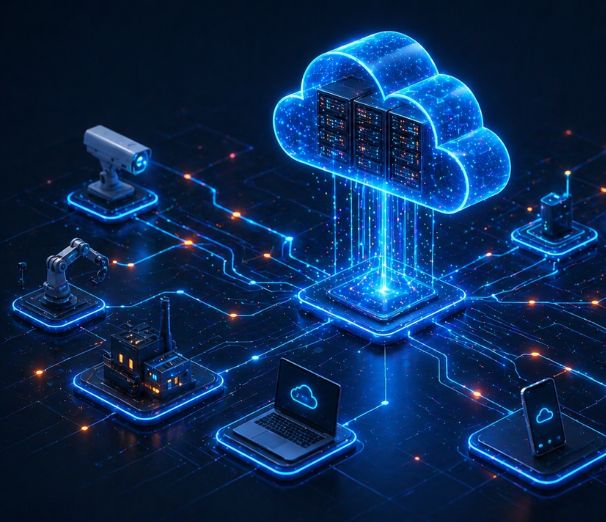
Cloud and edge are not two alternative choices. They are two components of the same system.

In Italy, more than 70 percent of companies have adopted cloud solutions, while investments in edge computing are growing rapidly, driven by IoT and real-time analytics.

The point is no longer where to process data. The question is how to orchestrate cloud and edge consistently.


The context: what’s going on

Companies are evolving toward distributed architectures:

  • Cloud ensures scalability and centralization
  • Edge enables local processing and low latency
  • Integration between the two becomes critical

In Italy this development is driven by:

  • Smart cities
  • Industrial IoT
  • Rollout of 5G

The result is increasing architectural complexity.

Where problems arise

The main critical issues emerge in integration:

  • Data sovereignty
    Data management between global clouds and local regulations
  • Integration with legacy systems
    Difficulty in connecting existing infrastructure
  • Scalability and cost
    Balancing investment and return

Cloud and edge work well separately. The problem is getting them to work together.

Insight Cloud e Edge

Where you are investing

Priorities focus on:

  • Migration to hybrid cloud models
  • Integration between data and applications
  • Real-time analytics on edge
  • Optimization by AI

Key opportunities also emerge:

  • Public/private hybrid models
  • Edge enhanced by AI
  • Vertical applications by industry
Abacus Group company development

What really works

More mature organizations take an integrated approach:

  • They design hybrid architectures from the beginning
  • Distribute loads between cloud and edge dynamically
  • They manage data and applications as a single ecosystem
  • Continuously monitor performance and costs

In summary: they don’t separate cloud and edge, they orchestrate them.

Insight Cloud e Edge

Abacus approach

Abacus works on cloud and edge as one system.

Key areas:

  • Cloud migration and modernization
    To enable scalable platforms
  • Hybrid IT
    integration between cloud and on-premise
  • Edge computing
    For local and real-time processing
  • Managed services
    for continuous monitoring and optimization

Expected Results.

Anintegrated architecture enables:

  • Increased operational agility
  • Reducing time-to-market
  • Improved data management and compliance
  • Scalable and resilient infrastructure
Abacus Group company development

Case studies

Background
Data-intensive companies in manufacturing and retail

Challenge
Manage large volumes of data in real time while maintaining control and scalability

Solution

  • Cloud + edge integration
  • Hybrid architectures
  • Distributed Analytics

Results

  • Increased decision-making speed
  • Better use of data
  • Increased operational efficiency

Download

Download the full version of the insight.

Cloud and Edge: integrating them to make systems really work

Full Insight

RELATED

Related Insight

Learn about other Abacus insights related to the topics of AI, ICT and business technology evolution.

Do you want to design a truly integrated cloud and edge architecture?

Let’s talk about your needs and build a concrete approach.